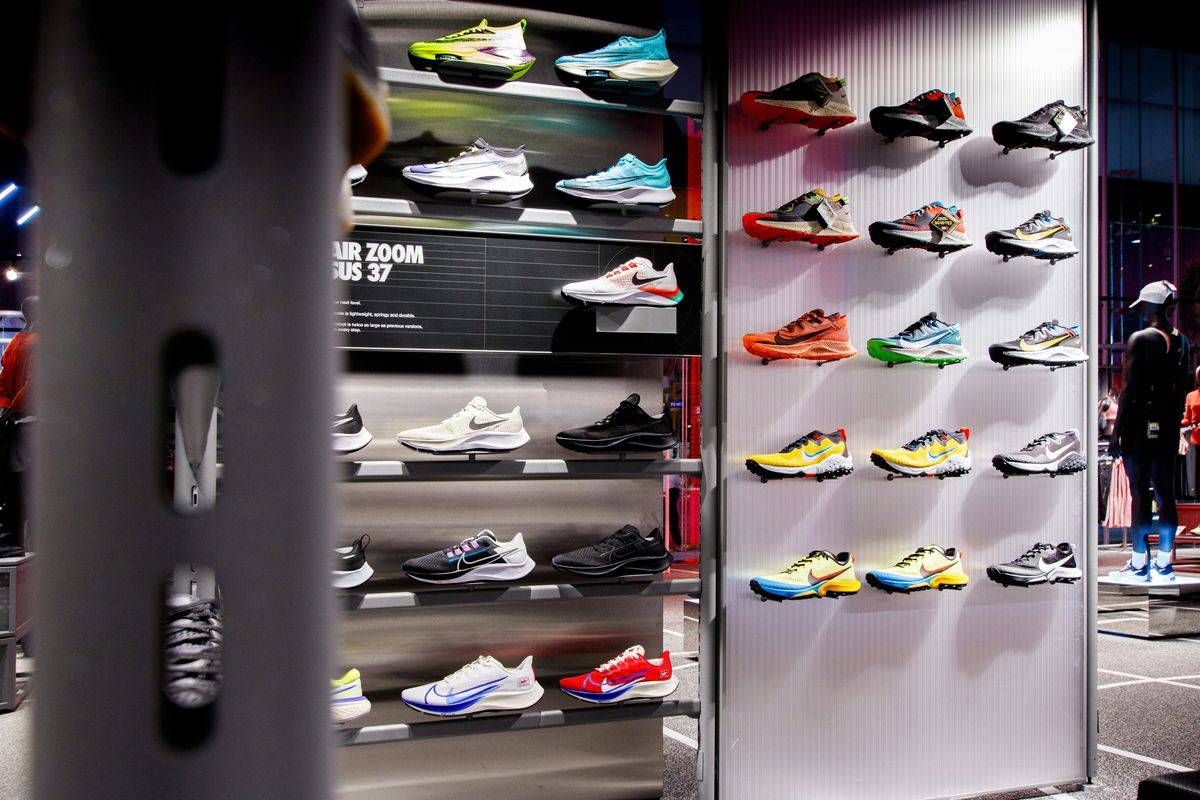
What to do when a competitor opens near your running store
By The Segments team
THE SHORT ANSWER
When a competitor opens near your running store, first record how you show on Google Maps and in AI answers for your key searches. Then close gaps in your Business Profile and reviews, make your in-stock shoes visible on Google, and lean into what a big box or national franchise can't copy: fit expertise, run clubs and race partnerships.

A new store near yours, whether a big box, a national franchise or another independent, changes what runners see when they search. Start by measuring that, then fix what you can control.
What should I check before the new store opens?
Get a baseline now, while you still have one. Without it, you won’t know what changed.
- Pick your key searches. “running shoes near me”, “running store [your town]”, “shoe fitting near me”, “gait analysis [your town]”, “trail running shoes”, and your top two or three models by name.
- Search each one on Google Maps on a phone, from three spots: your store, the new store’s address and a busy part of town where your runners live. Google ranks local results partly by distance from the person searching, so the order changes by location.
- Record the order. For each search and spot, note which stores show first and where you show.
- Ask AI assistants the questions runners ask: “best running store in [town]”, “where can I get fitted for running shoes near [neighborhood]”. Note whether your store is named, and what it says about you.
- Check your Business Profile performance. The Searches metric shows the search terms people used to find your business. It updates at the start of each month and is only available for verified profiles.
Use a simple tracking table and repeat it once a month:
| Search | Spot searched from | Month 0: you show | Month 0: who shows first | Month 1 | Month 2 | Month 3 |
|---|---|---|---|---|---|---|
| running shoes near me | Your store | |||||
| running shoes near me | New store’s block | |||||
| running store [town] | Neighborhood | |||||
| shoe fitting near me | Neighborhood | |||||
| [your top model] near me | Your store | |||||
| AI: best running store in [town] | n/a |
How does Google decide which store shows first on Maps?
Google says local results are mainly based on relevance, distance and prominence. Relevance is how well your profile matches the search. Distance is how far you are from the searcher. Prominence is how well known your business is, including reviews and links to your site.
Two lines on that same page matter here. “There’s no way to request or pay for a better local ranking on Google.” And businesses with complete, accurate information are more likely to show in local results.
You can’t move your store, and a new store across town will show first for some runners simply because it’s closer to them. What you control is relevance and prominence.
How do I close Business Profile and review gaps?
Compare your profile with the new store’s, line by line. Wherever theirs is more complete, fix yours.
| Gap | What to fix |
|---|---|
| Category | Primary category that matches a running store, with sensible secondary categories |
| Services | Gait analysis, shoe fitting, run club, race packet pickup, whatever you truly offer |
| Hours | Regular and special hours for holidays and race weekends |
| Photos | Your shoe wall, the fit area, staff fitting a runner, your group runs |
| Products | Your core shoes and the brands you carry |
| Reviews | Count, recent reviews and owner replies |
| Website link | Points to a page for that store, with the address and hours |
Our Google Business Profile checklist covers every field.
On reviews, Google’s guidance is plain: more reviews and positive ratings can help your local ranking, and replying shows you value feedback. Ask every fitted runner, not only the happy ones. Google’s policy prohibits offering incentives such as discounts or free goods in exchange for a review, and prohibits discouraging negative reviews or selectively asking for positive ones. For a system your staff will actually use, see how to get more Google reviews.
How do I show runners my shoes are in stock?
A new store, a big box and Amazon all compete on “do you have it”. Answer that on Google before the runner leaves the couch.
Local inventory ads and free local listings let you show nearby shoppers that your store has the products they’re looking for. To run them, Google requires a brick and mortar location customers can visit, store codes in your inventory data that match your Business Profile, and accurate inventory and pricing.
For run specialty, that means a runner searching for a specific model can see your store has it now. Our local inventory ads setup guide walks through the setup, and brand co-op can help pay for the ads when the brand’s terms allow it.
How do I show up in AI answers?
Some runners now ask an AI assistant before they pick a store. Google says there are no additional requirements to appear in AI Overviews or AI Mode, and that existing SEO fundamentals still apply: content available as text, good images, and structured data that matches what’s visible on the page.
In practice, write clear pages that answer what runners ask: how your fitting works, how long it takes, which brands you carry, when the run club meets, where each store is. Keep your name, address and hours the same everywhere. Our guide on how AI assistants recommend running stores goes deeper.
This is the work behind our Get Found service: during setup, Segments optimizes the Business Profile for every location, runs a full catalog pass and adds a structured data baseline, so Google and AI assistants can read what your store offers.
What can’t a big box or national franchise copy?
Your people and your place in the running community. Make them visible.
- Fit expertise. A real gait and fit session, 20 to 40 minutes with someone who runs. Name it on your profile, your site and in your replies to reviews.
- Run clubs. A weekly group run that leaves from your door builds a habit no ad can buy. Post it on your profile and your site, and put the details where AI assistants can read them.
- Race partnerships. Packet pickup, a training group for the local half, a booth at the expo. Runners remember who got them to the start line.
- Local knowledge. Trail recommendations, the best routes in town, which college cross country team trains where.
- Follow-up. A check-in after the first 50 miles in a new shoe.
How do brand reps help when a competitor opens?
Your reps may already know. Brands often hear about new accounts early, and a good rep can tell you what the new store is likely to carry.
- Ask what’s changing in your area: new accounts, allocation, launch dates.
- Show your sell-through. Reps back accounts that move product and send clean reorders.
- Ask for launch support: early allocation, a fit night with the rep, staff clinics, co-op toward a launch campaign. Terms vary by brand.
- Spread your co-op across brands. Claiming from every brand gives you a steady marketing budget, which matters more when a new store is spending to open.
What is a 30/60/90-day plan when a competitor opens?
| Days | Focus | Actions |
|---|---|---|
| 1 to 30 | Measure and fix the basics | Record your baseline searches and AI answers. Fix Business Profile gaps for every location. Start asking every fitted runner for a review. Talk to each rep. |
| 31 to 60 | Show stock and expertise | Get in-stock products showing on Google. Publish clear pages on your fit process, run club and each store. Reply to every review. Plan a co-op launch campaign with one brand. |
| 61 to 90 | Lean into community and re-measure | Launch or relaunch a run club or race training group. Partner with a local race. Repeat your baseline searches from the same spots and compare month by month. |
Compare month 3 with month 0, search by search. Where the new store shows first, look at what its profile has that yours lacks. Where you show first, keep doing what got you there.
Questions owners ask
Should I cut prices when a big box store opens nearby?
Usually not as a first move. Price matching on core shoes squeezes your margin without changing why runners choose you. Make the fit, the advice and the community easier to find and easier to try, and use targeted offers, such as a run club perk, instead of blanket discounts.
How do I compete with Amazon as a local running store?
Be easy to find with stock showing, and be worth the trip. Runners who order online still search before they buy. If Google shows that your store has their shoe in stock today, with strong reviews and a fit process explained, you give them a reason to come in that a box on the porch can't.
How long does it take to see changes on Google Maps?
Business Profile fixes, such as categories, hours and services, can show within weeks. Reviews build over months. Track the same searches from the same spots every month so you can see real movement instead of day to day noise.
Do I need to tell my brand reps about a new competitor?
Yes. Reps often hear about new accounts early and can tell you what the new store will carry. Ask about launch allocations, co-op and staff clinics, and share your sell-through so the brand sees you as the account worth backing in your area.
See how your store shows up.
The free Storefront Report grades your store on Google, in AI answers, in reviews and in ads, door by door.